Lo Esencial: A Costa Rican Filmed a Birth in Sarapiquí and Won Santiago Wild
Felipe Vega Con, 28, is the first Costa Rican to win a category at Latin America's most important nature film festival
A clarification before we begin.
This article is not about nocturnal wildlife as spectacle. It is not a piece on "the amazing animals Costa Rica hides," nor an invitation to go see them. That is a different conversation, and it rarely ends well for the animals.
This article is about a 28-year-old Costa Rican who walked into the forest in Sarapiquí in September 2025 to take routine photographs and came back with one of the rarest births a camera can capture. That minute and a half just made history.
What follows are six facts, all verified with primary sources, about why Felipe Vega Con's short film Lo Esencial matters far beyond the trophy.
Ninety seconds that took six days in the forest
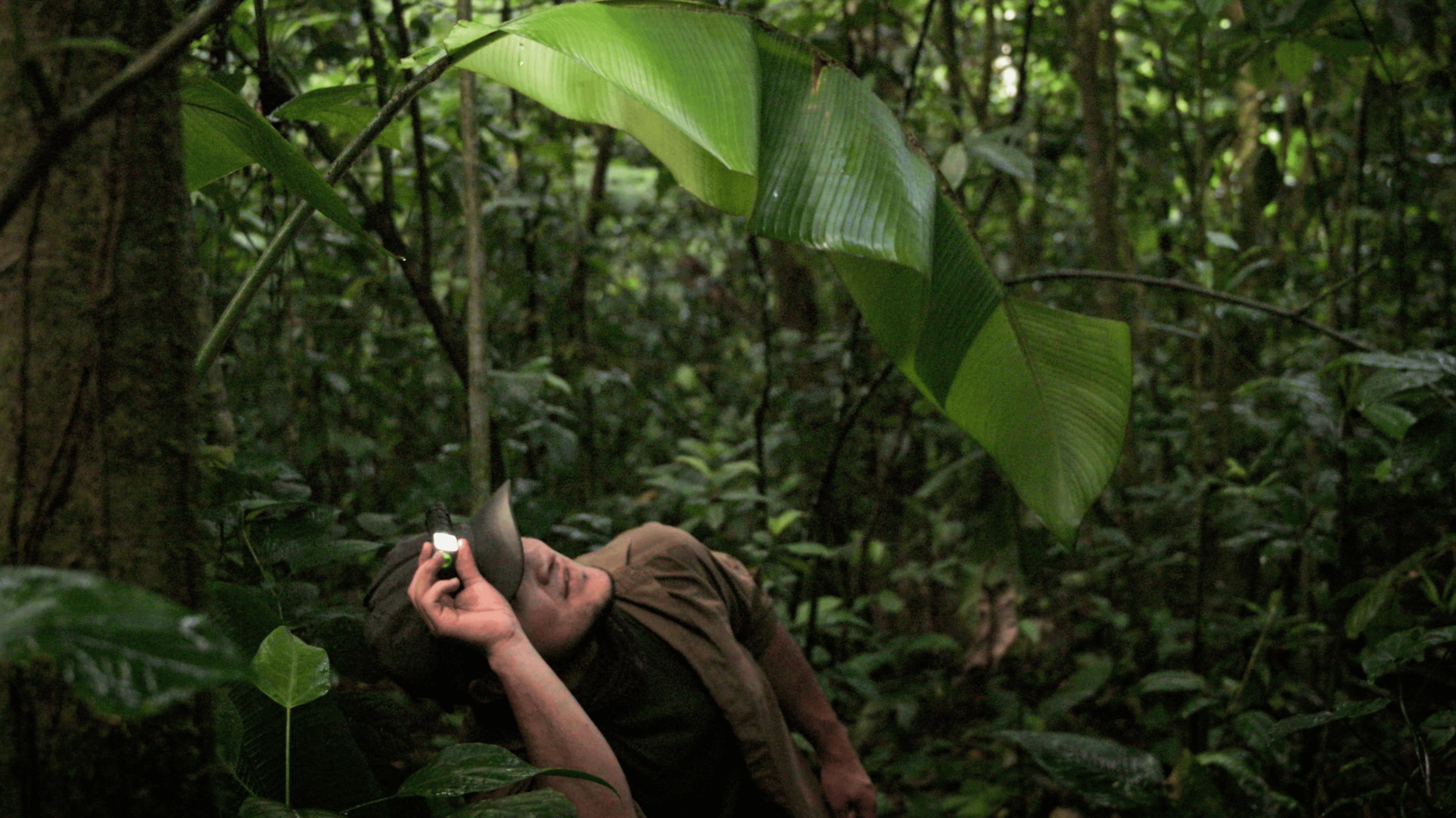
Felipe entered the forest with a modest plan. He wanted to photograph the presence of Honduran white bats — a species he had searched for, without luck, on previous visits1.
Heavy seasonal rains made shots of their nighttime flight nearly impossible. Wildlife doesn't follow a script. The main actors are free-roaming animals that sometimes appear and far more often do not.
That outing took six days in the field and close to thirty hours of work between expeditions, editing and hand-drawn animations Felipe made himself1. Felipe is a visual artist with a degree in Fine Arts and works in graphic design. He started photographing nature during the pandemic, in 2020.
Read that again: six days in the field distilled into ninety seconds. Patience is the raw material of nature cinema, and it almost never shows up in the credits.
A species that builds its own home
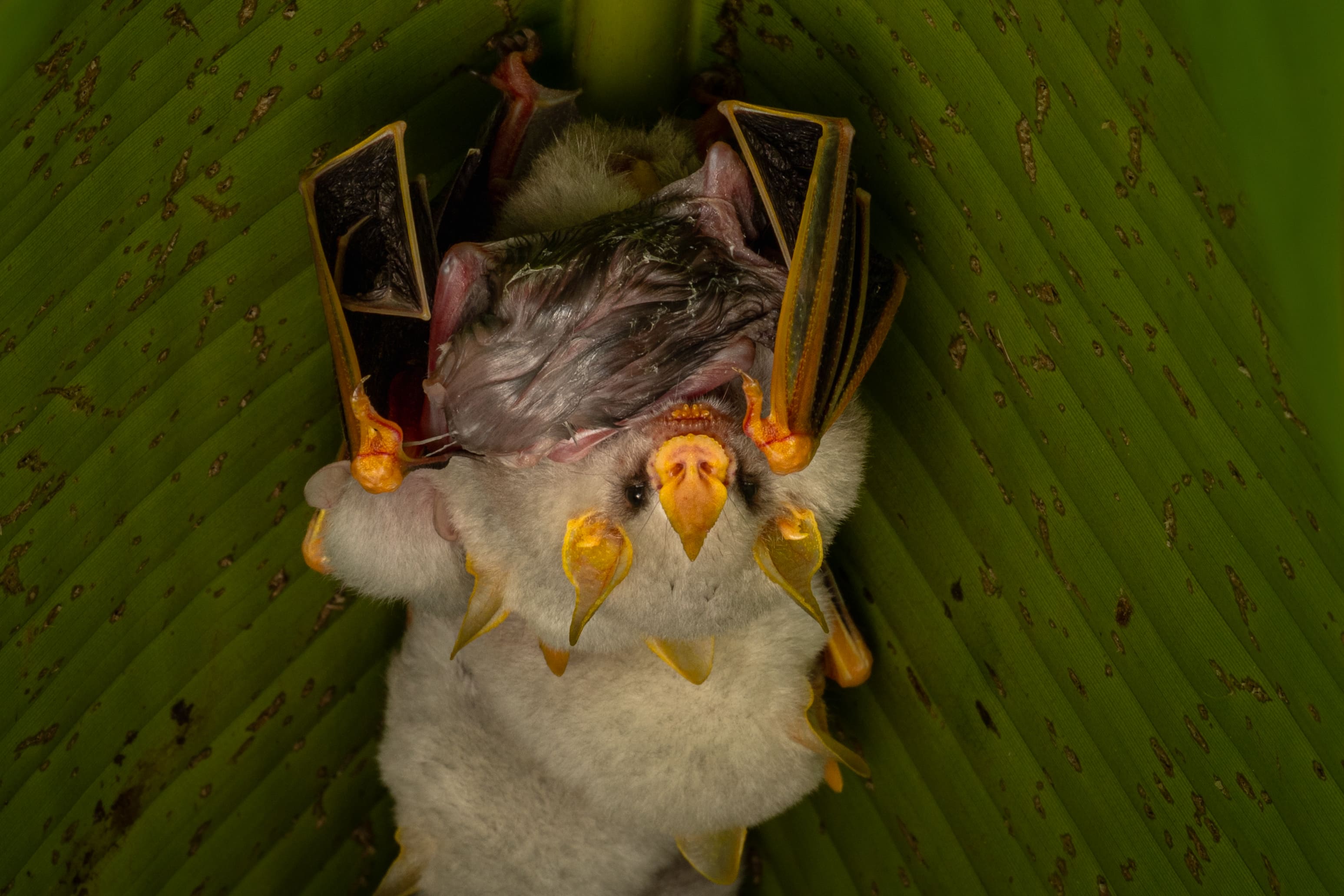
The protagonist of the short is the Honduran white bat (Ectophylla alba), a species that lives in the tropical forests of Honduras, Nicaragua, Costa Rica and western Panama. It measures between three and four centimeters. It has snow-white fur and yellow ears and nose. It is the sole member of its genus2.
Its most extraordinary behavior isn't its color. It's the architecture.
These bats bite the lateral veins of heliconia leaves with surgical precision until the leaves fold into a tent. Beneath that living canopy, they live in small groups of four to fifteen individuals. When sunlight filters through the leaf, the greenish reflection on their fur conceals them almost completely from predators2.
One nuance worth stating clearly: the International Union for Conservation of Nature classifies the species as Near Threatened3. Deforestation and the loss of heliconias — their only home — are the primary threat. Filming this bat is also documenting something the rest of the tropics is losing.
What he never expected to find
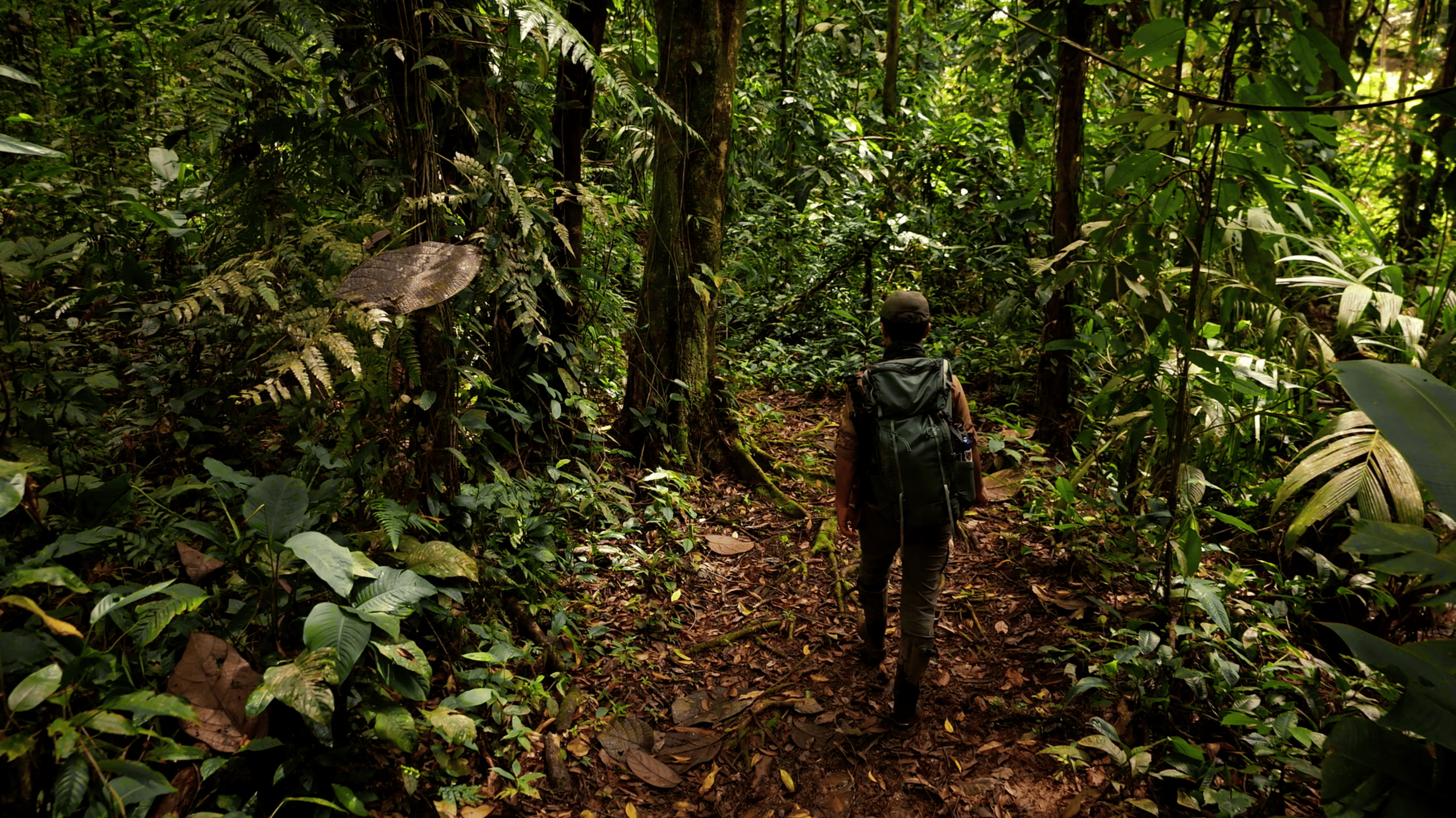
When Felipe walked into the forest that particular day, he wasn't even looking for it.
I wasn't expecting to come across a birth.
He went in to take photographs. He found a female Honduran white bat mid-labor. He filmed it. A bat giving birth in the wild is one of the rarest, most difficult moments to capture in Central American tropical wildlife — these are nocturnal, cryptic animals that almost no one has seen outside of a book.
Felipe built the short around that moment. The narrative isn't classic documentary. It's a metaphor. He says so himself:
A veces salen de cosas silenciosas, de cosas muy pequeñas y frágiles.
And there's an editorial thesis behind it. Bats carry stigma. Felipe chose to tell their story differently1. Not to document — to shift the mental image we carry of a species almost no one has seen up close.
Latin America's most important nature film festival
The Santiago Wild Festival is organized by Chilean platform Ladera Sur with the support of the National Geographic Society and Jackson Wild Fest4. By industry consensus, it is the most important nature film showcase in Latin America.
The 2026 edition was its sixth. It drew more than 250 entries spread across roughly ten categories. The awards ceremony was held on May 7 in Santiago de Chile, at the Centro Cultural La Moneda. The jury included producers and filmmakers who have worked with Netflix, Disney and National Geographic1.
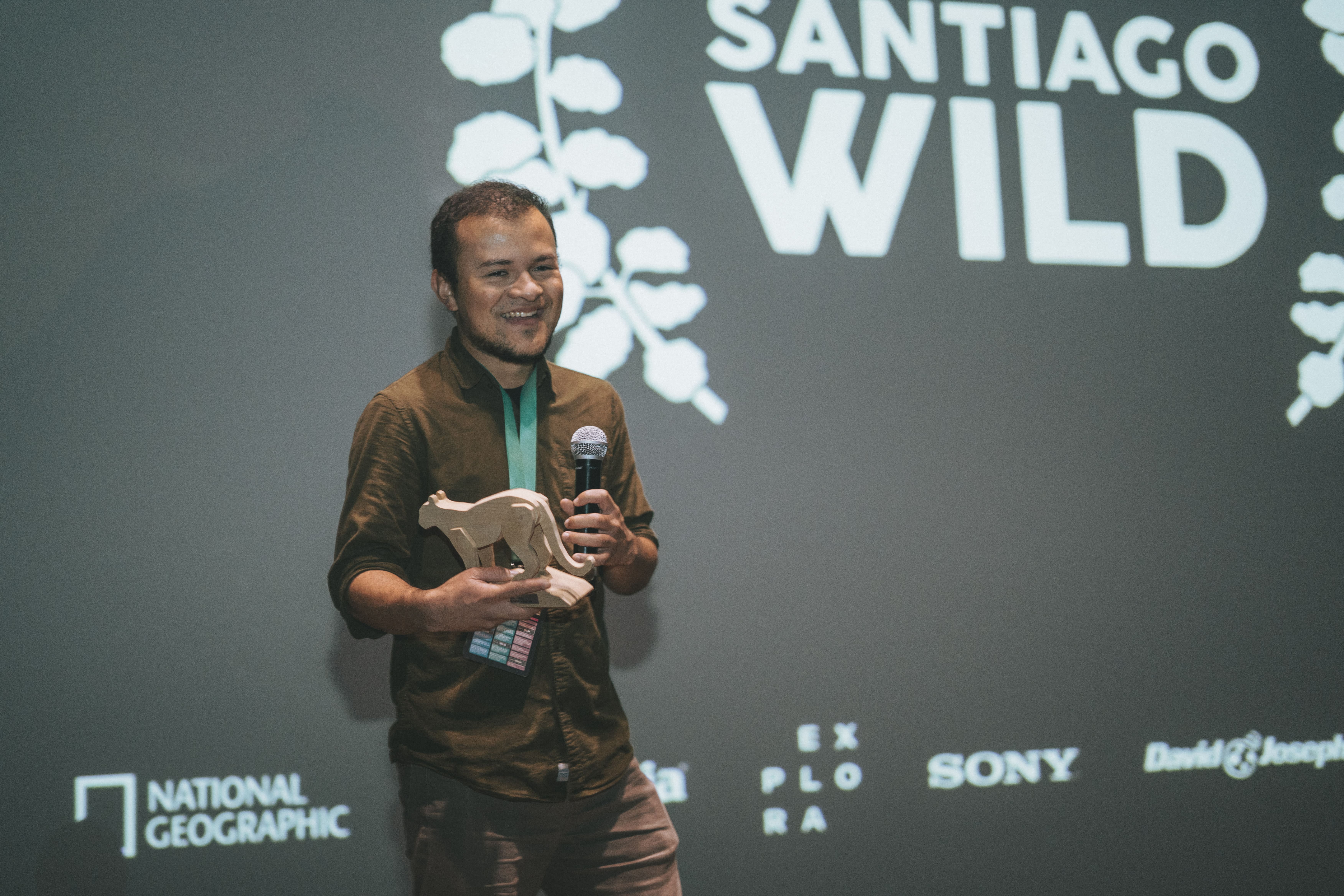
Felipe won the Digital Explorers category, which honors short audiovisual pieces made specifically for digital platforms and social media4. In the final, he competed against one filmmaker from Peru and three from Chile. He traveled on his own dime, dipping into his savings after learning of the nomination.
He is the first Costa Rican ever to win a category at the festival.
Para mí es realmente un honor ser el primer tico en ganar.
What this means for Costa Rica
Here comes the nuance that separates journalism from propaganda.
Winning Santiago Wild does not turn Costa Rica into a nature-film powerhouse. The Costa Rican delegation at the festival included other filmmakers nominated in different categories — with documentaries on wildlife such as the golden-eyed tree frog — and none of them took first place1. The recognition is individual before it is sectoral.
But it opens something up. It means a young filmmaker, with no crew, no production company behind him, financing his trip out of personal savings, can compete in the same league as Netflix, Disney and National Geographic. And win. That wasn't happening before.
It also means the forests of Sarapiquí — that same geography Felipe walked through in September — still sustain encounters that almost no other country in the tropics can offer today. Costa Rica's forest cover climbed from 21% to 57% in forty years. That political decision, played out over decades and underwritten by taxes on fuels and tourism, is what makes it possible for a 28-year-old Costa Rican to come back from six days in the forest with an international trophy under his arm.
Where to watch it
Lo Esencial has been available on YouTube since its premiere. But this Saturday, May 23, from 10 a.m. to 12 noon, it screens in person at CETAV in Parque La Libertad, as part of the Abejas y Bichos series. The event is free and open to the public, presented by Esencial Costa Rica, the Ministry of Culture and Youth, Parque La Libertad, Costa Abeja and ANCAR.
What you have in front of you in those ninety seconds:
- A species that deforestation in the rest of the tropics is already erasing
- A birth that almost no camera has ever recorded in the wild
- A 28-year-old Costa Rican filmmaker working alone, on his own savings
- The first win for Costa Rica in a Santiago Wild category
- Six days in the forest that most documentary cinema never accounts for
A minute and a half. But it isn't short.
● Place visited · Sarapiquí, Costa Rica