Portuguese man o' war on the South Caribbean: why it arrives in waves, and never all at once
Every outlet repeated SINAC's alert this week. What they left out is the mechanism that decides which beach the colony lands on.
Every outlet that covered this week's alert repeated the same message: the Portuguese man o' war has appeared on the South Caribbean, don't touch it, it can sting even when dead. All true, all important — but none of it explains the most fascinating part of the phenomenon: why these animals arrive in waves, why they never all come ashore at once, and why no one in Costa Rica can yet say whether this is happening more often than it used to.
Not an animal — a crew
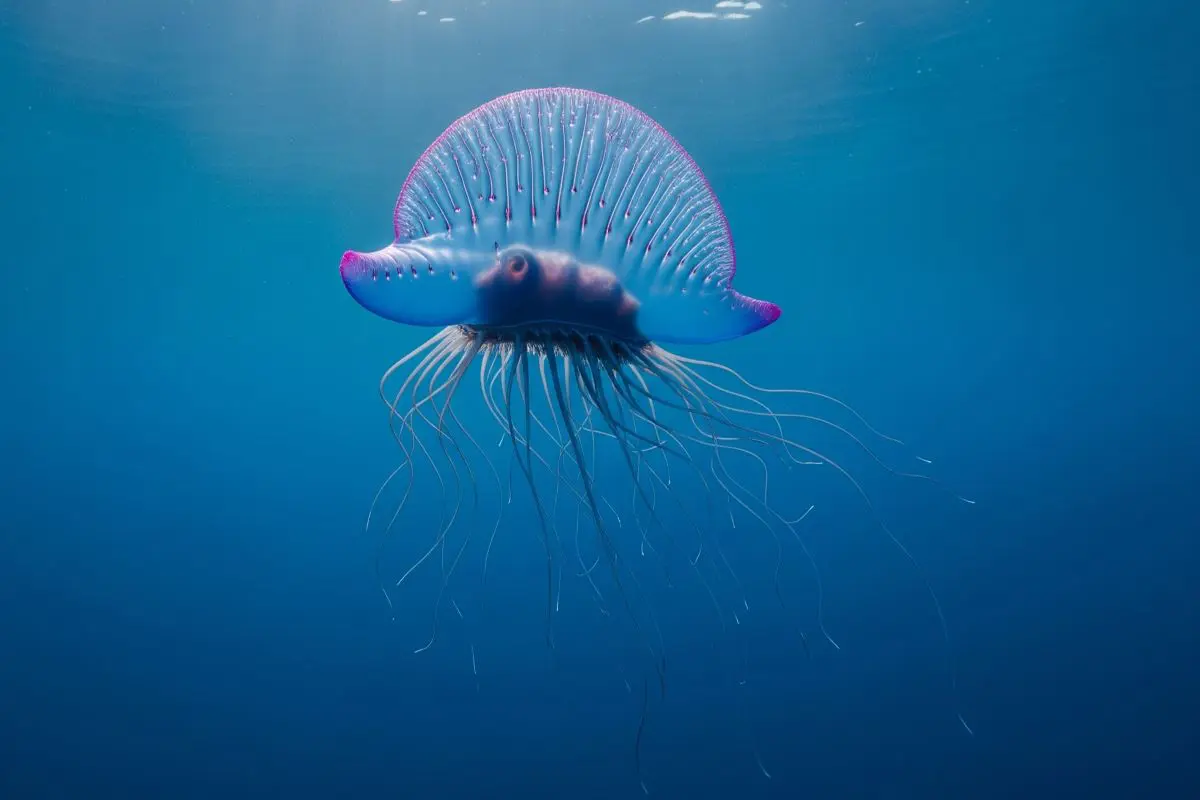
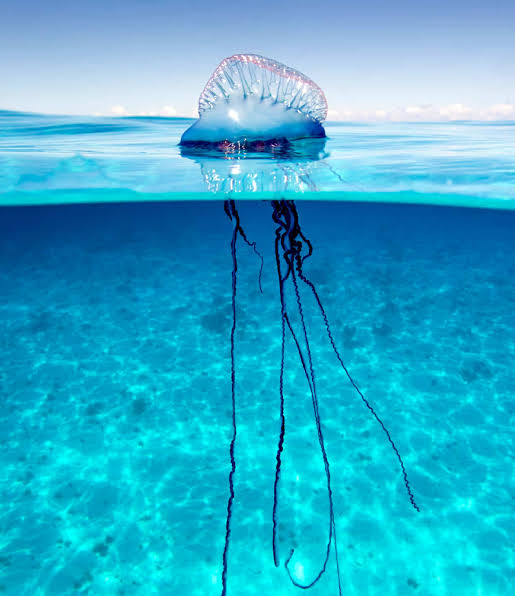
That palm-sized blue or violet bubble drifting on the surface isn't a single organism. It's a colony of specialized zooids that cannot survive apart: one serves as the sail and float, others hunt and paralyze prey with their tentacles, others digest, others reproduce. The Portuguese man o' war (Physalia physalis) belongs to a little-studied group of colonial hydrozoans known as siphonophores.3 The same toxins it uses to hunt are what it uses to defend itself against predators.2
Why they arrive in streaks — and never all together
The man o' war doesn't swim: it has no means of propulsion of its own. It moves because the wind pushes the sail that rises above the water. And here is the mechanism no other outlet mentioned this week: each colony is born with its sail angled either to the left or to the right — an asymmetry fixed during larval development, not a choice — and that orientation determines which way it drifts relative to the wind. Left-sailed colonies drift to the right of the wind; right-sailed colonies drift to the left.3
The result is a kind of biological insurance policy: the wind can never push both types onto the same coastline at the same time.
A 2024 study that tested 3D-printed replicas inside a controlled wind tunnel confirmed the pattern: under light wind, left- and right-sailed colonies separate symmetrically; under strong wind, nearly all of them end up drifting in the same general direction, regardless of their shape.4
What we know about the South Caribbean this week
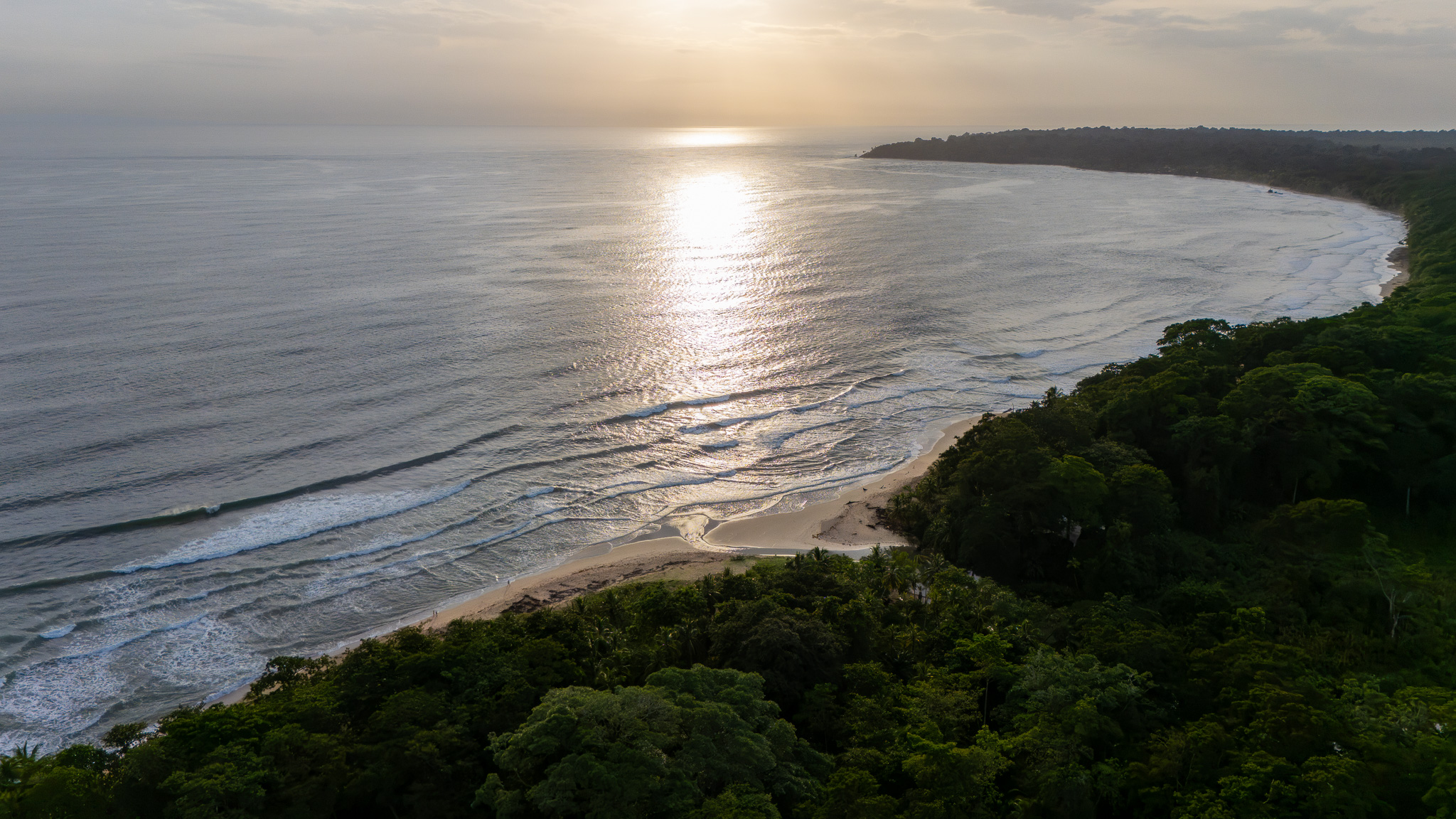
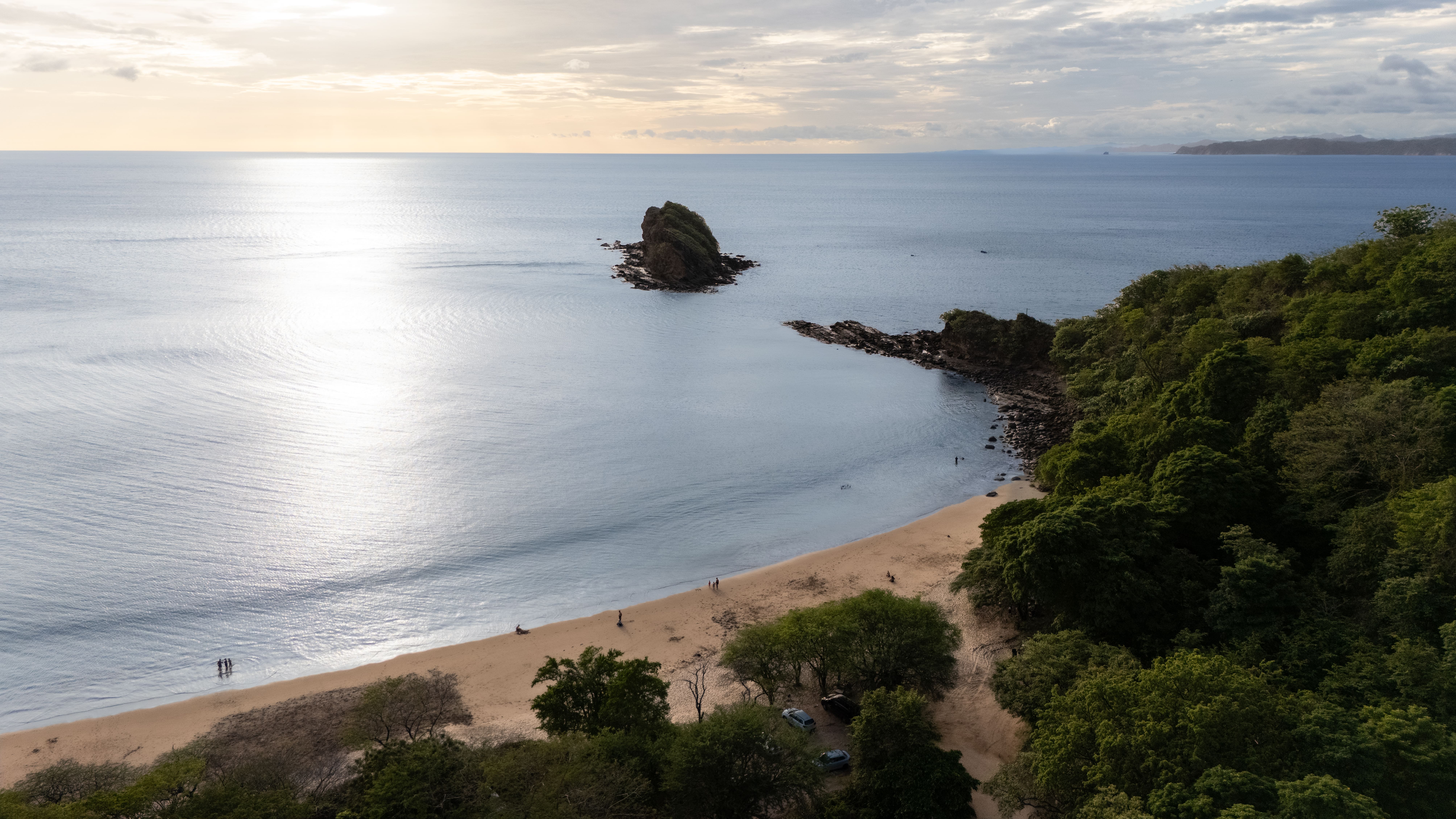
The National System of Conservation Areas (SINAC), through the Ministry of Environment and Energy (MINAE), issued a preventive alert over the presence of Portuguese man o' war in Cahuita National Park and neighboring high-traffic beaches.1 Specimens have been reported at Cahuita, Tortuguero, Manzanillo, Punta Uva, Puerto Viejo and Cocles.5 The beaches remain open — the species' presence can shift from one day to the next depending on wind and current, so conditions vary by beach and by time of day.5
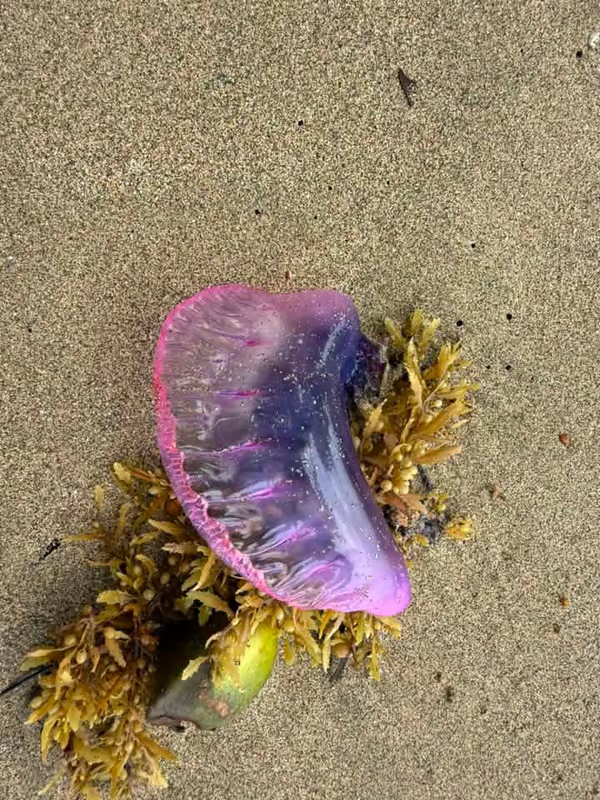
The tentacles can reach up to 30 meters.3 They carry stinging toxins capable of causing burns and intense pain, and they remain dangerous even after the animal has died and washed up on the sand.1 If you see one in the water or on the shore, do not touch it under any circumstances — step away and alert other swimmers or the lifeguard on duty.
The gap no one is mentioning
None of the outlets that covered this alert — nor SINAC or Cimar-UCR in the excerpts they were quoted on — said whether these arrivals are more frequent than in previous years. There's a simple reason: unlike Portugal or Australia's east coast, where citizen-science projects have spent years systematically recording sightings, Costa Rica has no equivalent public monitoring program for the Portuguese man o' war on its Caribbean coast. Without that dataset, no one can claim the phenomenon is increasing — only that it's being seen, and talked about, more on social media. It's a distinction that matters: the true frequency of an event is one thing; the frequency with which we hear about it is another.