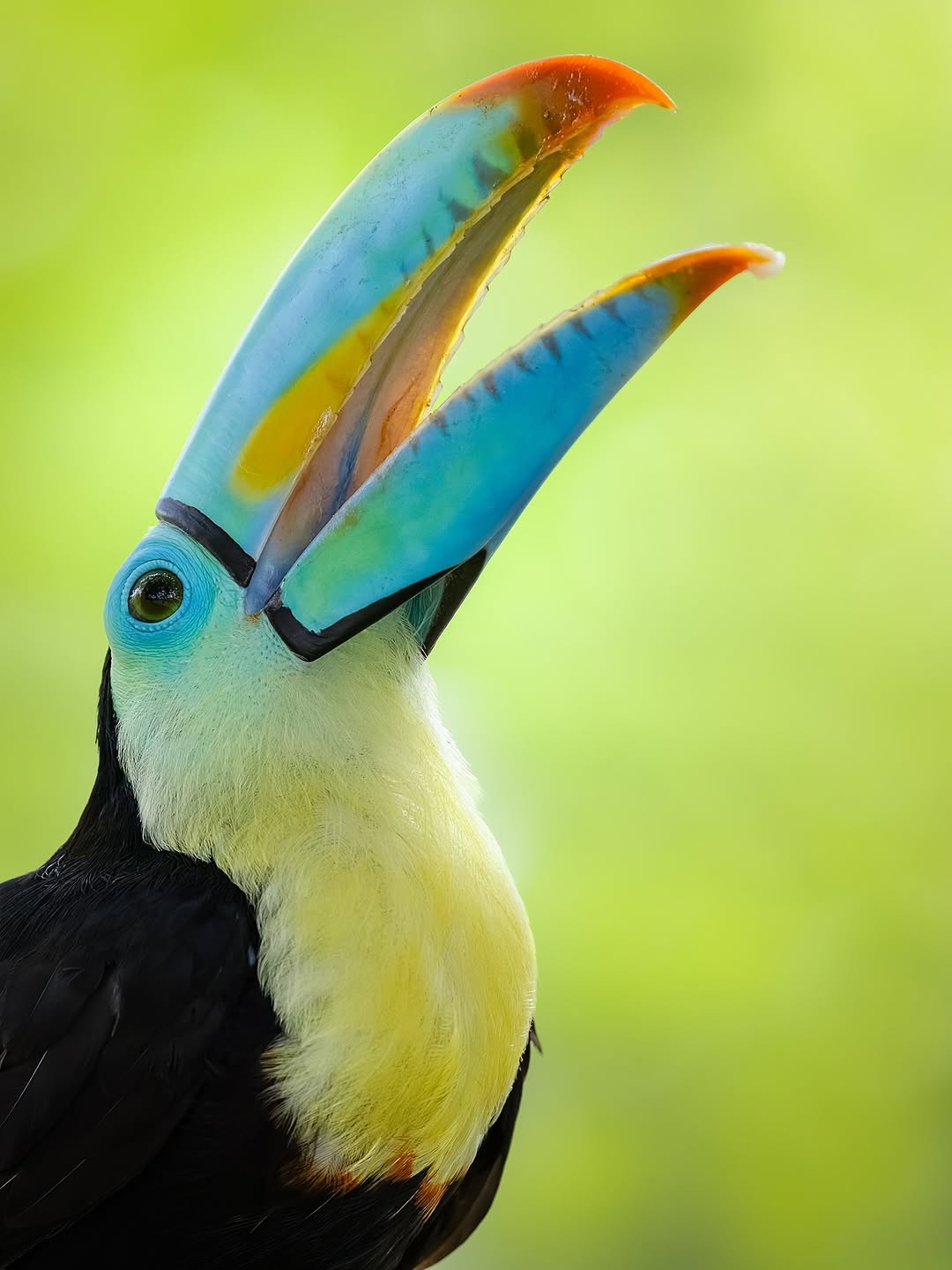
A Blue Toucan, a White Toucan and an Orange Shark: Why Almost No One Gets the Story Right
The press gathered them under a single word — "mutation" — but behind the three animals lie three distinct biological phenomena, and a more interesting question: why is Costa Rica the one seeing them?
In recent weeks, a startling image made the rounds on social media: a keel-billed toucan whose bill — the famous mosaic of green, orange and red — appeared washed in deep blue. The reaction was predictable: "mutation," "one-of-a-kind bird," the photo shared thousands of times over. But one detail was lost in the noise. A team of Costa Rican biologists and researchers urged caution: before declaring what was happening to the bird, they announced a study to document the possible mutation in its coloration.1
That pause — rare in the breakneck pace of social media — is the right place to begin. Because the blue toucan is not an isolated incident, and because almost everything said about it, and about the animals that came before it, has been told with the wrong word.
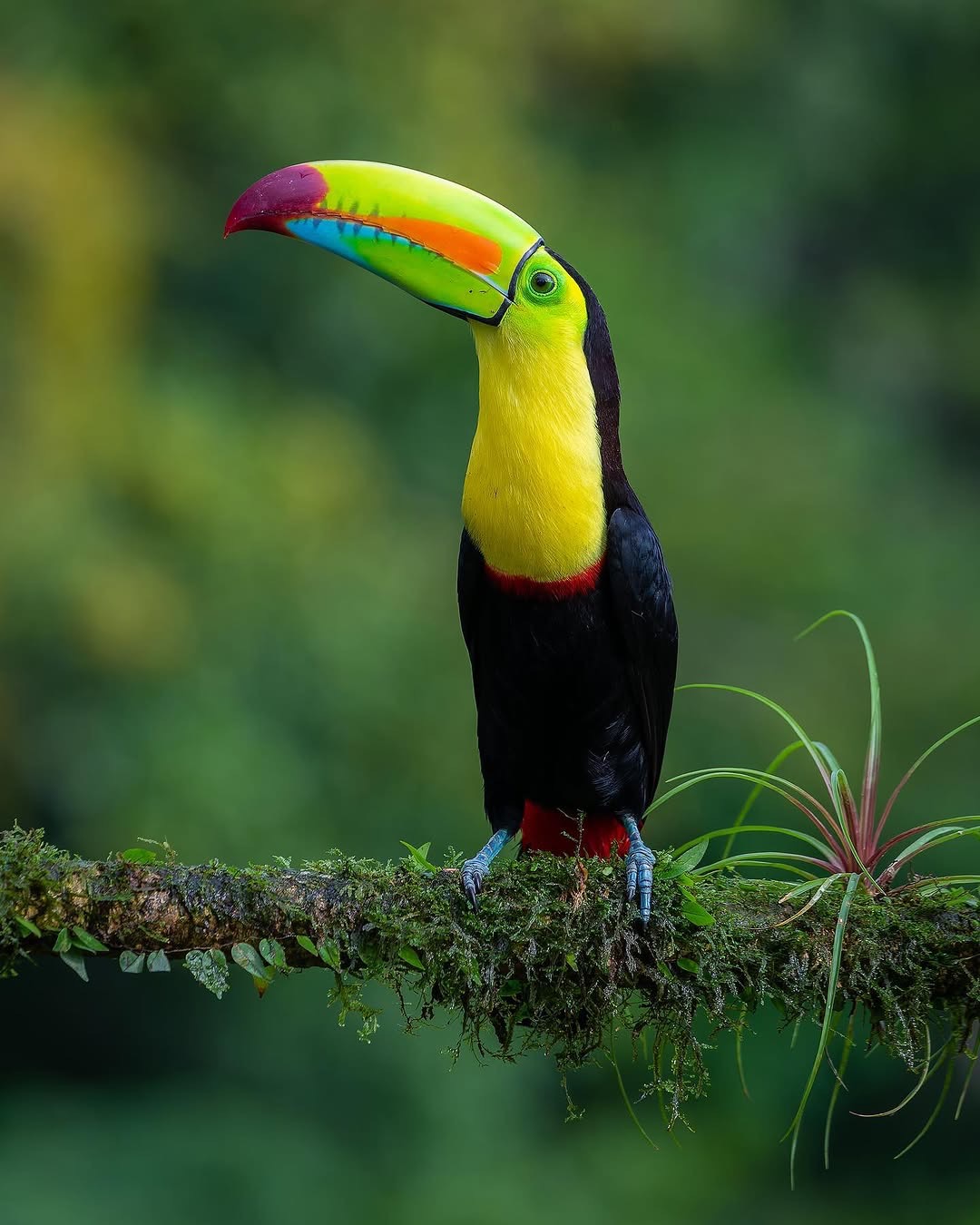
Three headlines, the same misunderstanding
Over the past two years Costa Rica has put two other "impossibly" colored animals in the headlines, alongside the blue toucan.
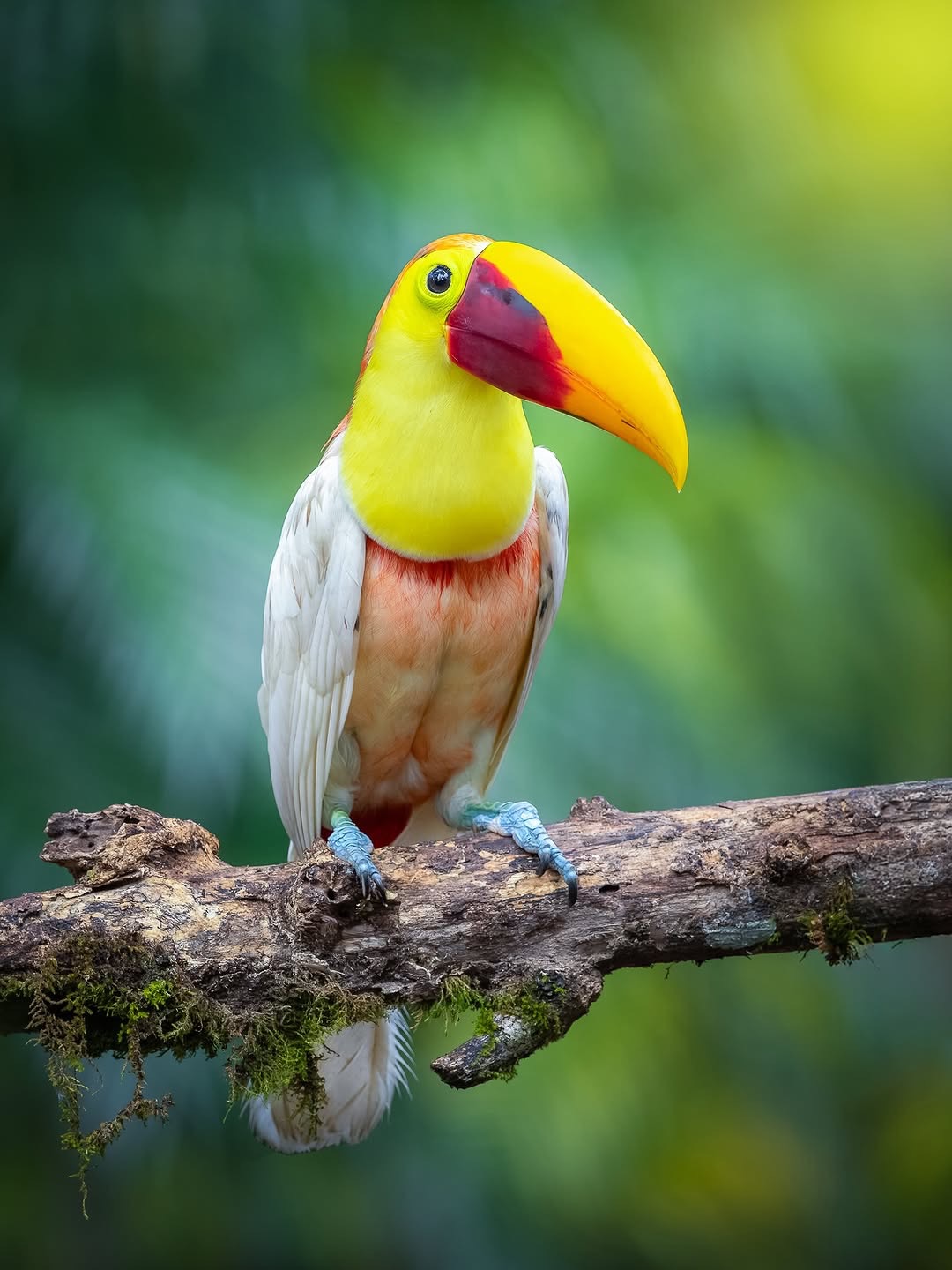
The first was a white toucan: not a keel-billed, but a yellow-throated toucan (Ramphastos ambiguus) with almost entirely white plumage, nicknamed "Panchito" or "the unicorn." It was first sighted in Guápiles in 2019 and went viral again in 2025, photographed over the years by a succession of different people.2
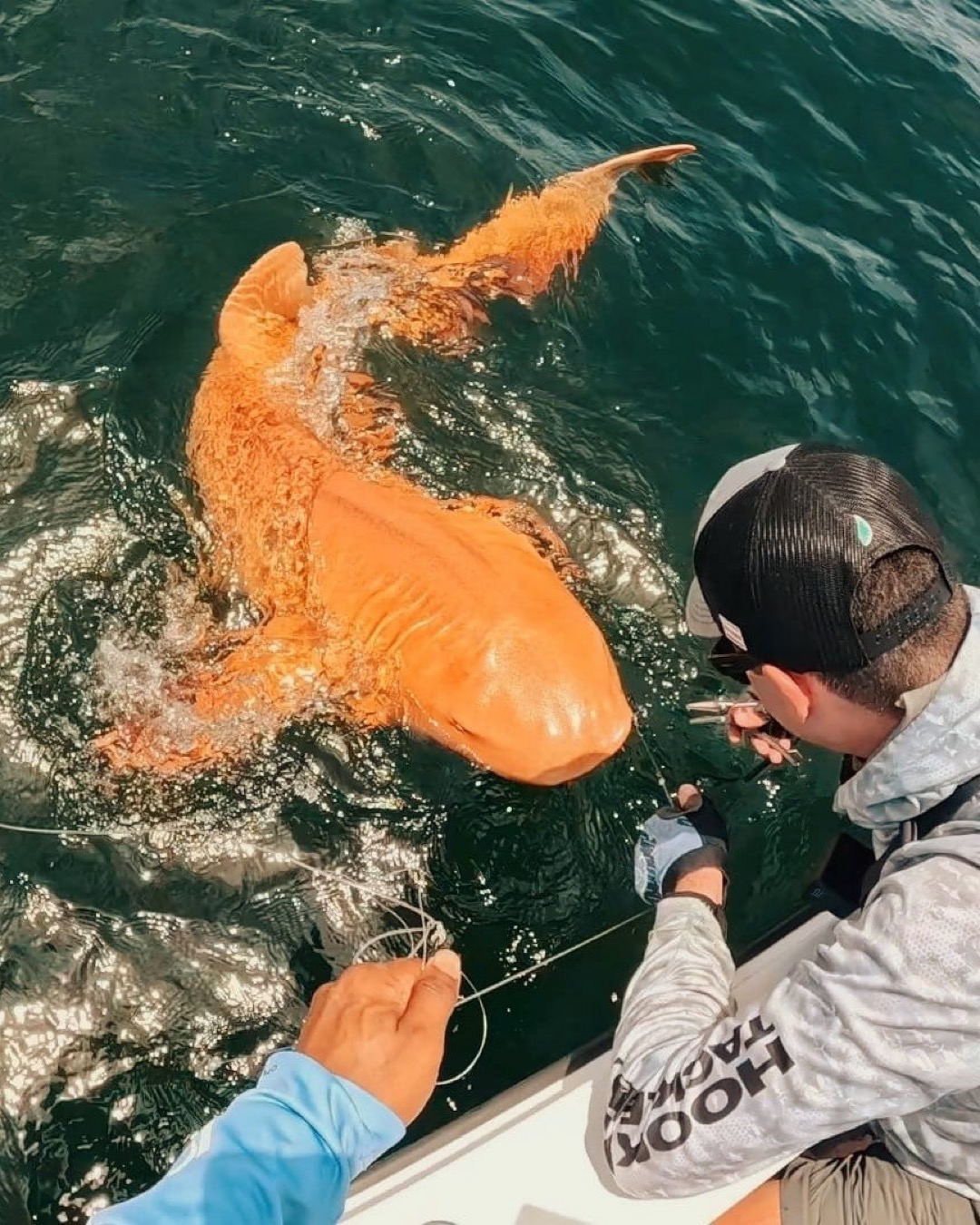
The second was a shark. Off the Caribbean coast, near Tortuguero National Park, sport fishermen pulled from the water a nurse shark with brilliant orange skin and white eyes — a species usually a discreet brown. The case was eventually documented in a scientific journal as the first record of its kind in the world.3
A blue toucan, a white toucan, an orange shark. Three headlines that all reached for the same word: mutation. And that's where the problem lies, because that single word conceals three phenomena with almost nothing in common.
Where an animal's color comes from
Before pulling them apart, it helps to know where color comes from. In birds and other animals there are, broadly speaking, three sources. Melanin, which the animal produces itself, accounts for blacks and browns. Carotenoids, which the animal cannot produce and must obtain through its diet — plants make them — give us yellows, oranges and reds. And structural color, which is not a pigment at all but the way light bounces off tiny nanostructures, produces nearly all blues. Green, in many birds, isn't even a green pigment: it's structural blue with a layer of yellow on top.4
With those three pieces in hand, the three animals sort themselves out.
The white toucan has leucism. Unlike albinism, the bird produces melanin normally; the problem is that the pigment doesn't deposit properly in the feathers. That's why the plumage looks white or pale while the eyes, bill and legs retain their usual color. It is, in fact, the most common color aberration in birds. A biologist from the Universidad Nacional warned that such visibility comes at a cost: a bird this conspicuous fares worse against predators and in courtship.2
The orange shark is almost the opposite: not a loss of color, but an excess. It shows xanthism — an overabundance of yellow-gold pigment — combined with traits of albinism, visible in its white eyes. Scientists called it albino-xanthochromism, and clarified a fine point most headlines skipped over.
It wasn't carotene that produced the orange. Highly unusual.
In other words: the shark's orange did not come from its diet, as would be the case with a carotenoid, but from another route. Different, once again, from the white toucan.
And the blue toucan? It's the only one of the three that, honestly, still cannot be named. A reasonable hypothesis is that it has lost the yellow pigment which, layered over structural blue, gives the bill its usual green; without that yellow, the blue would show through. But "reasonable" is not "proven," and the chemistry of a toucan's bill — which is keratin, not feather — has its own peculiarities. What the mechanism is, precisely, is what the announced study will have to determine. It wouldn't be the first time the country has documented something of the sort: in 2021, a paper described a keel-billed toucan in Pital de San Carlos that lacked melanin but retained its carotenoids.5
Why here?
Three extraordinary animals in two years invites an easy — and false — conclusion: that Costa Rica produces more rarities than other places. There's nothing to support that. What the country has is not a factory of anomalies, but something more interesting: eyes.
Enormous biodiversity packed into a small territory; a dense community of nature photographers, guides and birders who spend hours — sometimes days — waiting for a single instant; social networks that turn that instant into global news within hours; and, behind it all, a line of Costa Rican research dedicated to rigorously documenting these color aberrations species after species, from toucans to motmots.6
The white toucan illustrates it well: it wasn't "discovered" once but seen and seen again by a chain of people — a photographer in Guápiles, others who traveled for days to find it, amateurs who shared their images — over six years. None of those sightings would exist without that network.
The most honest thing that can be said about the blue toucan today is that no one yet knows what's going on with it. And that wait — the biologist's request for time, the photographer holding steady in the rain — is not a limitation: it is precisely what allows Costa Rica to see what others miss. It's not that the country has more impossible colors. It's that it has people to look for them, to record them and to share them. That combination — biodiversity, a community of photographers and naturalists, and the networks that connect them — is what ultimately placed a blue-billed toucan before the eyes of the world. And it is, also, the passion that drives us.